
How to Search for a Warrant in San Augustine County
Start with your paperwork. A citation, court notice, bond paper, or cause number names the court that issued the process, and that court is where a San Augustine County warrant check begins. The San Augustine Sheriff posts no online warrant search, so bring county-held process questions to the Sheriff at 219 N Harrison. Staff there can tell you whether they will confirm a warrant and who issued it. Ask what procedure applies. Ask whether counsel should arrange the appearance instead.
- Identify the city, precinct, or court printed on your paperwork.
- Call San Augustine Municipal Court for a city citation or the shared JP office for a precinct case.
- Use the District Clerk for district-court papers and the County Clerk for County Court matters.
- Call the Sheriff's Office about county-held process or service; its page is contact information, not a search form.
- Use iDocket to locate a case trail, then ask the court to confirm current warrant status.
San Augustine County Warrant Search: iDocket Limits
San Augustine County runs iDocket in its County Clerk case-management system, per OCA verification, and the iDocket search can help you spot a case and its court contact. The help page lays out name, case-number, and advanced search options. Treat it as a case index. A hit does not prove an active warrant. A blank result does not prove none exists, either. The iDocket search interface shows the controls themselves and no sample warrant record.

Let a result point you to the likely court. Then confirm warrant status with that office. The iDocket search help notes that partial names work, though it posts no San Augustine warrant-number format and does not promise advanced fields for every case type.

Keep your search identifiers off public pages. A vendor's index is never the official warrant status, so a San Augustine County check ends with the court, not the screen.
San Augustine County Warrant Search Fields
The Sheriff's page offers no public search fields. San Augustine County JP and city court pages point to payment routes, not a warrant lookup. The only field details on record come from iDocket's general help, so the table below splits known controls from unreported local options.
| Field or control | Type | Required | Local note |
|---|---|---|---|
| Sheriff warrant search | None published | Not applicable | Official page lists contact details only. |
| State and County | Dropdowns | Search condition | iDocket generic help says Texas, then San Augustine. |
| Litigant | Name text | For name search | Partial names allowed in generic help. |
| Case or cause number | Text | Conditional | Local format was not stated. |
| Category, case type, court | Advanced controls | Unknown | Option lists were not rendered in the inspected help. |
| JP / Municipal payment | External link | Optional | No local warrant-status fields are shown. |
No San Augustine County Warrant Roster
The Sheriff's official page lists 936-275-2424 and 219 N Harrison but posts no public roster, warrant desk, or online search for San Augustine County. Its jail contact details have nothing to do with warrant checks. Call and ask whether the office can confirm county-held process or point you to the issuing court. The site states no counter hours, surrender steps, or bond instructions. The Texas court directory is a routing tool, not a county warrant database. San Augustine County spreads its process across district, county, justice, and municipal courts.
What a San Augustine County Warrant Search Returns
No official sample of a public warrant result exists for San Augustine County. Treat the fields below as questions for the clerk, not a promise of what every local file shows. An example from another Texas county tells you nothing about the format here.
| Warrant number | San Augustine format not published; request the exact number from the issuing office. |
|---|---|
| Cause or citation | Connects process to the court file or ticket. |
| Issuing court | May identify District Court, County Court, one of four JP precincts, or Municipal Court. |
| Process type | Ask whether the label is arrest warrant, FTA, capias, or capias pro fine. |
| Bond and status | Local schedules and status codes were not posted in the inspected sources. |
Need a sample for a records request? Ask the San Augustine County clerk for a blank or redacted form. Never lift personal values from a public result into an unrelated request.
San Augustine County Warrant Search Gaps
Why would a name miss an online case index in San Augustine County? Three reasons come up often: the searcher looked at the wrong court, a file has not posted yet, or the record is restricted. The Sheriff's page posts no complete public warrant list, and iDocket tracks cases rather than confirming an active warrant. So a clean screen is not clearance. Work from the court named on the citation. Then ask the Sheriff whether the county is holding the service process on it. If no office will confirm a San Augustine County warrant informally, Chapter 552 gives you a written request route to any releasable public information. Remember that each office controls only its own slice of the warrant records.
Where San Augustine County Warrants Are Checked
San Augustine County splits its court records by level, so a warrant check has to start at the right desk. Felony papers from the District Court sit with the District Clerk at the courthouse. County Court matters run through the County Clerk, whose address on the county page differs from the OCA verification, so call before you drive over. Justice Court cases share one JP contact, and a precinct map shows which precinct applies. Citations from the city of San Augustine belong to the Municipal Court inside City Hall. There is no single statewide public warrant search in Texas for local bench warrants. The DPS FTA/FTP service only covers violations that courts report and ties into license renewal. DPS itself says license staff cannot confirm warrants; ask each reporting court about compliance.
San Augustine County Court Warrant Routes
Two county office pairs in San Augustine County sit near each other but do different jobs: the Sheriff at 219 N Harrison and the JP courts at 221 N Harrison. The District Clerk keeps District Court papers, while the County Clerk holds County Court files. Neither clerk can certify every outstanding warrant in the county. For a San Augustine city citation, call the Municipal Court before visiting City Hall, since its two official pages list different hours. A JP citation should be routed with the county precinct map. Call ahead, because the public sources describe no warrant counter, public entrance, or walk-in procedure. The state's judicial directory supplies court contacts and levels for San Augustine County. A directory listing still will not tell you the status of a particular warrant.
Access and Restricted Warrants
Texas law gives you a right to ask for public records in writing from the office that holds them. Not everything is open, though. Sealed files, juvenile records, and material tied to an active investigation may stay withheld under the law. When San Augustine County sends you a partial answer, ask the office to state its reason for each redaction or refusal. That beats treating a trimmed response as the complete record.
Key rules:
Texas Government Code Chapter 552 governs public-information requests and exceptions.
Family Code Chapter 58 protects juvenile records in specified circumstances.
A missing online result is not proof no warrant exists; confirm with the issuing court.
San Augustine County Warrant Record Request
A phone call settles most warrant questions. When the San Augustine County court or Sheriff cannot answer that way, mail a written Texas Public Information Act request to the governmental body and ask where its public-information officer takes them. Describe your own warrant-status records, add the court or citation details you have, and ask for electronic copies if the office can send them. Request a cost estimate first. The county publishes no Sheriff warrant-request form, no local fee schedule, and no set response time. The Chapter 552 statute page lays out what the law covers.
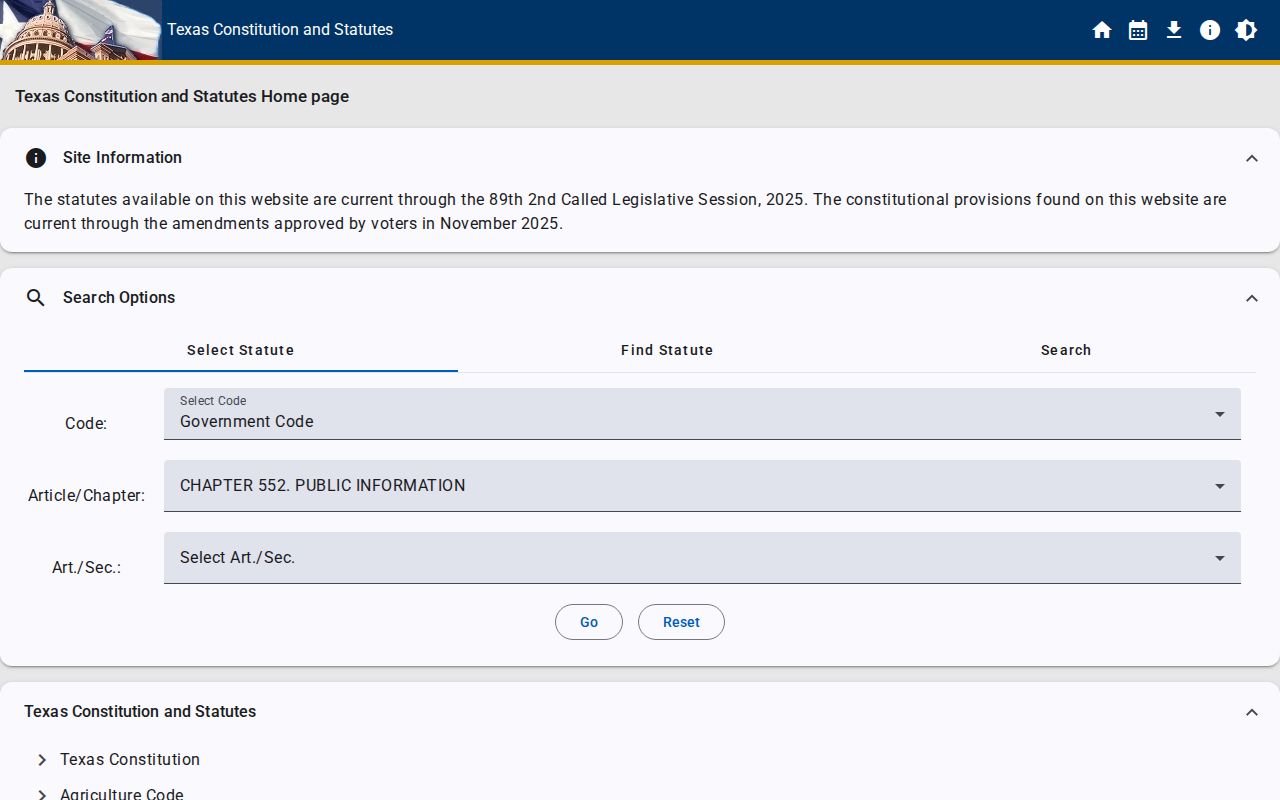
For help wording a request, the Texas Attorney General open-government page offers guidance; San Augustine County itself posts no warrant form.

A filed request is not a court ruling in San Augustine County, and it does not resolve active process.